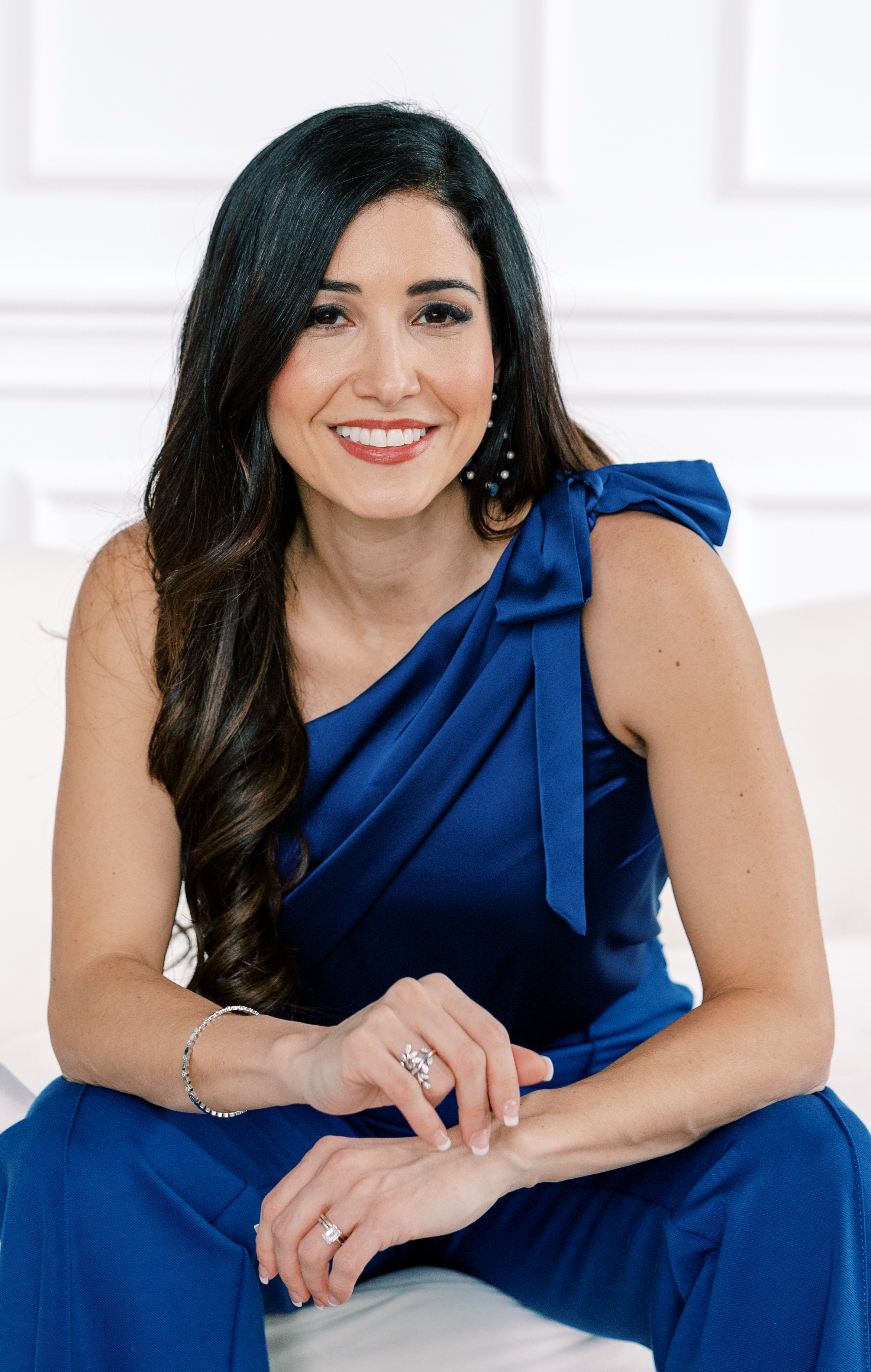
Founder. Speaker. Researcher.
I build language for the leadership moments people usually feel before they can explain.
I’m the founder of Russo Leadership, creator of The Authorship-Permission Model™, and a Venezuelan-born former executive who has spent two decades inside rooms where leadership is demanded before conditions are ideal.
The Story
I was trained as a pharmacist in Venezuela. When I came to the United States at twenty-three, my degree did not transfer the way my ambition did. I started again.
I became an au pair. I rebuilt my language, my confidence, and my understanding of what it means to enter a room already aware that the room has decided something about you.
Years later, I was leading inside healthcare and professional sports. I became the person who could hold complexity, translate pressure, read the room, and keep the work moving.
And still, I knew there was a cost.
There is a kind of success that looks strong from the outside and feels like self-abandonment on the inside.
I built Russo Leadership because I wanted better language for that gap.
The Pattern
Again and again, I saw leaders who knew the work. They had the skill. They had the judgment. They had the values.
Then the room changed.
The stakes rose. The power dynamics shifted. Belonging became expensive. Recognition became conditional. Safety, legitimacy, and access to self were no longer guaranteed.
The question became clear.
Why can a leader access their judgment in one room and lose it in another?
That question became the foundation of my research.
The Framework
The Authorship-Permission Model examines the identity-behavior gap in leadership: why capable leaders sometimes cannot access or enact what they know when pressure rises, the room changes, or the cost of belonging increases.
The model asks how identity is authored by the leader, permitted by the environment, and received on the terrain where leadership happens.
It does not treat identity as a slogan. It does not assume that leading from identity is automatically good leadership. It asks a more precise question.
What happens when identity enters the room?
Wave One interviews generated and stabilized the framework architecture.
The model offers language for a recurring pattern. It is not a psychometric score or a fixed label.
The research informs speaking, advisory, leadership development, and the practical work Russo Leadership does with organizations.
Speaking
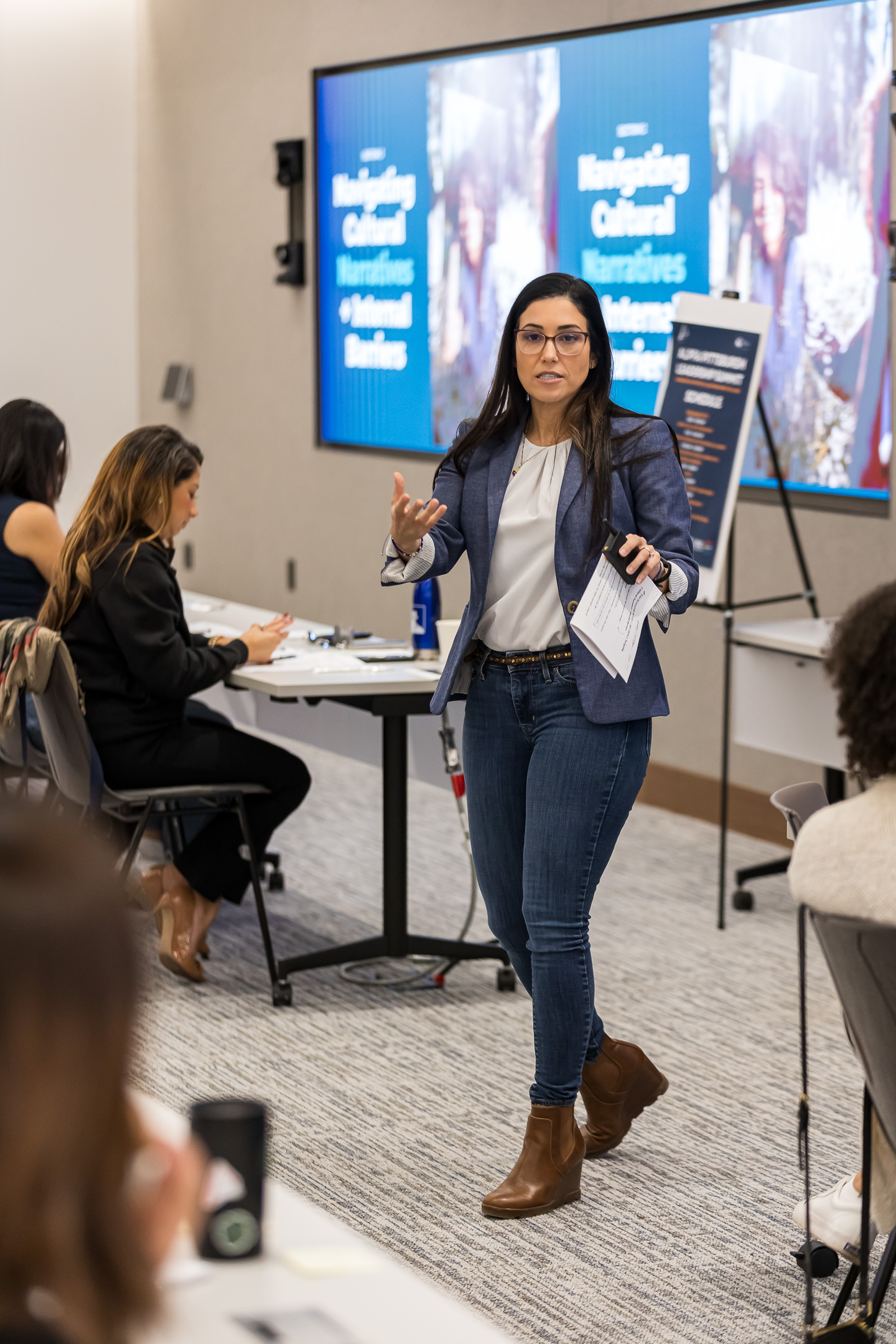
Nayli speaks about the pressure moments where leadership becomes costly: when the room changes, expectations rise, and people begin leading from scripts they did not consciously choose.
Her talks combine research, lived experience, and practical language audiences can use immediately.
Speaking Topics
How identity is authored, received, protected, and expressed in the rooms where leadership happens.
Three moves leaders can make when pressure rises and the room is not built for clarity.
A keynote on lineage, identity, and what women teach the next generation without saying a word.
How leaders stay connected to judgment, voice, and steadiness when the stakes rise.
Formats
Pivotal Moments
Some moments teach you what pressure costs. Some teach you what voice means. Some teach you how much of leadership is learned before anyone gives it a title.
01
That first disappointment taught me what it feels like when your voice is not chosen.
02
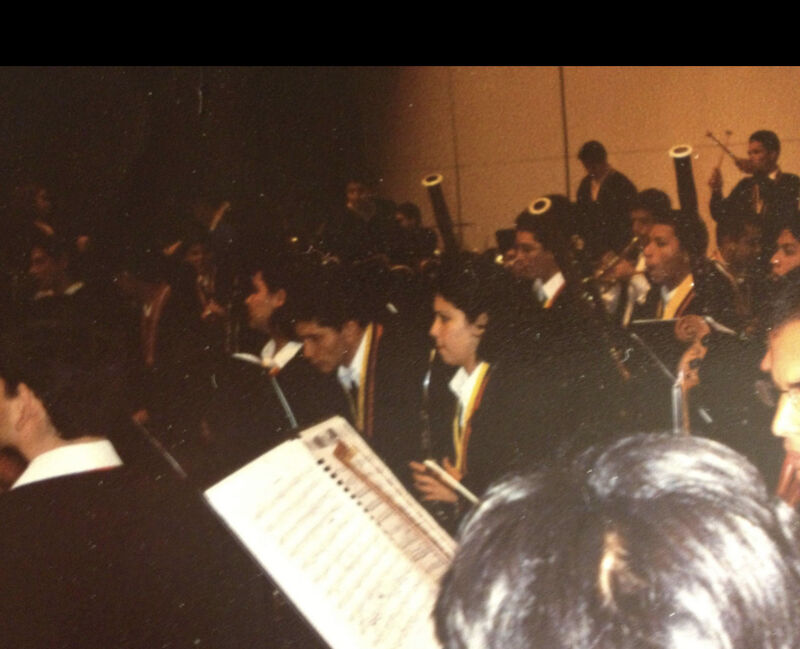
I learned how to create something precise and beautiful, even when the conditions were not perfect.
03
I studied between sets and carried two futures at once. The one I was trained for, and the one I was still trying to imagine.
04
I arrived with a degree, a new language to learn, and the belief that starting over did not mean starting empty.
05
I learned how to hold pressure, strategy, people, and expectations in rooms where decisions moved quickly.
06
I left to build the work I needed earlier: language for the cost of performance, and practice for leadership that holds.
Undeniable Latinas™
Undeniable Latinas™ is the part of this work built for Latina leaders who are done translating themselves into someone else’s version of authority.
It names the credibility tax, the pressure to assimilate, and the cost of becoming fluent in rooms that were not built with you in mind.
This is not confidence theater. It is identity work, structural clarity, and a room where the cost does not have to be explained before the work can begin.
What I Believe
Every room rewards something. Every room makes something costly. Leaders learn those rules, even when no one says them out loud.
A leader can know what to do and still lose access to that knowing when pressure rises.
It shapes judgment, voice, protection, adaptation, and what the room thinks it is allowed to expect.
It shows what the leader has authored, what the room permits, and what the terrain charges.
Insight is not enough until it changes behavior, rhythm, decision-making, and follow-through.
Bring Nayli Into the Room
Whether you are booking a keynote, planning an executive session, or looking for deeper support inside your organization, the work begins the same way.
See the pattern. Name what is shaping it. Build what can hold.